
The index finally settled with a huge loss of 307 points (2.6%) at 11,356.

The global COVID-19 situation, rollout of vaccines, geopolitical trends, Union Budget and economic recovery would be the major factors driving investor sentiments in 2021 after a tumultuous year which saw both 'the worst of times and the best of times' for the stock market, said analysts. What a year 2020 turned out to be! From witnessing gigantic losses to record-shattering gains, investors went on a roller-coaster ride amid the coronavirus pandemic and massive stimulus measures. Markets closed 2020 with remarkable gains of around 16 per cent, but will the winning ways continue in 2021 as well?

Tech Mahindra was the top laggard in the Sensex pack, cracking over 5 per cent, followed by Infosys, HDFC, IndusInd Bank, Reliance Industries and NTPC. On the other hand, Hero MotoCorp, L&T, Maruti, UltraTech Cement and Sun Pharma led the gainers' chart.

Economics and politics both have major roles in determining oil prices.
The Sensex closed with a huge loss of 1.4% (138 points) at 9,445 owing to profit taking.
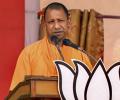
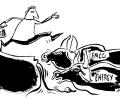
While TMC leaders ridiculed Prime Minister Narendra Modi and UP chief minister Yogi Adityanath for lifting an image purportedly from West Bengal, the BJP in the Mamata Banerjee-ruled state took potshots at crashing flyovers in the eastern state over the use of an image in a newspaper ad
The Sensex, on the back of selective buying in techs, PSUs and other old economy counters, is now up 12 points at 5,863. The Nifty is up four points at 1,857.

All Sensex components ended in the red, with ONGC leading the pack by tanking around 9 per cent. IndusInd Bank, M&M, SBI, NTPC, ITC, Axis Bank and PowerGrid shed up to 7 per cent.

Shares of SpiceJet fell sharply by over 8 per cent as flight operations of the cash-strapped company were grounded on Wednesday on payment woes.

The stock was the worst performer among the blue-chips on both Sensex and Nifty.

Time to take profits and move to the sidelines in an euphoria, says Sonali Ranade
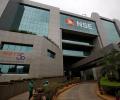
It is mystifying how the NSE, a near-monopoly, gets protection, as the February 24 episode shows, when it is competition and accountability that should be the regulatory objective, says Debashis Basu.

Sebi's move to curb volatility didn't work for the market as rules were applicable for both long and short positions which makes difficult new long positions while short positions caused more price damage due to lack of liquidity.
The Bombay Stock Exchange benchmark Sensex has lost 478.60 points, or -2.80 per cent, to slip to 16,586.55 in afternoon trade on Thursday amid panic selling in markets worldwide following the US Federal Reserve's warning that the outlook for the world's largest economy is grim.
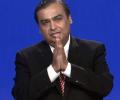
Billionaire Mukesh Ambani on Friday backed the proposed data privacy and cryptocurrency bills, saying India is putting in place the most forward-looking policies and regulations. Ambani, who has been a votary of Indians owning and controlling their own data and the nation drafting strict rules around how digital information is stored and shared, said nations have the right to build and protect strategic digital infrastructure. Stating that data is the 'new oil', he said every citizen's right to privacy has to be safeguarded. "India is putting in place the most forward-looking policies and regulations," he said at the Infinity Forum, hosted by International Financial Services Centres Authority (IFSCA).
The Sensex closed down 349.08 points or 2.54% at 13,382.01, and the Nifty down 96.75 points or 2.46% at 3,832.
Trading volumes in the currency segment today fell nearly 50 per cent and 40 per cent on the National Stock Exchange (NSE) and the MCX-SX, respectively. This followed a levy of stamp duty by the Delhi government on proprietary trades, say market players. Brokers say the consequence of this will also be felt in equity and commodity segments, as Delhi-based jobbers and arbitrageurs will be hit.

'The growth drivers are mostly invisible, but the growth is undeniable at least for now,' notes Debashis Basu.

Indian regulators have identified certain groups as 'financial conglomerates' and they are being monitored closely for any systemic risks they may pose.

'The only thing that is safe right now are government securities.'
As many as 30 companies saw their share prices rising to new life-time highs, while 51 stocks got stuck at their upper circuit limit. While the stocks scaling new peaks included some known names like Essar Shipping, Southern Ispat and Usher Agro, the list of those hitting upper circuit limit were mostly penny stocks belonging to T and Z groups of the BSE.

Yes Bank was the top loser in the Sensex pack, crashing 8.36 per cent, followed by NTPC, M&M, Vedanta, Sun Pharma and TCS, which lost up to 4.81 per cent lower.

Those who have been handed the pink slip shouldn't make too many loan queries, advises Raj Khosla.

Both indices are down nearly 9 per cent from their all-time highs in mid-January. A sharp reversal seems difficult this time as the peak impact of the virus is yet to play out.
The Sensex is likely to rule between 13,200 and 14,400 points and the rupee may touch Rs 54-55 by June next, Credit Suisse India has said in a report.

Tiger Woods, the world's best golfer and a leading force in sports marketing, was hurt in a car accident in Florida on Friday but was released from a hospital in good condition after treatment.
Foreign investors faced flak for pulling down the domestic stock market deep into the red over the past one month. However, a little bit of data crunching shows that Foreign Institutional Investors are not guilty as charged.
Big bull Rakesh Jhunjhunwala feels the Indian stock markets, currently on an upward rally, may 'burst' in a month or two.

The analysis is based on the free-float market capitalisation.
Gold prices fell due to persistent selling by stockists triggered by a heavy sell-off in global markets.
Terror gripped the capital markets as stock prices plummetted following two blasts in Mumbai that killed 40 people and injured 132 on Monday.

'Only then will we withdraw the agitation.'

Sectorally, BSE healthcare, capital goods, power, oil and gas, metal, auto, energy and banking indices fell up to 3.53 per cent.
The laggards include FMCG (16 per cent), Energy (37 per cent) and Media (34 per cent).

While the bond market is relatively conservative about their interest rate expectations, the currency market seems to be projecting that interest rates should be much sharper
Top losers in the Sensex pack included SBI, Tata Steel, Hero MotoCorp, Bajaj Auto, ONGC and IndusInd bank.
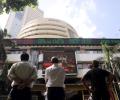
The bulk of the erosion in terms of value took place in India's most-valued firms. For instance, Mukesh Ambani-led Reliance Industries alone has lost Rs 3.8 trillion in m-cap, followed by HDFC Bank, which has seen its value erode by Rs 2.45 trillion and Tata Consultancy Services (TCS), which has lost Rs 1.85 trillion to stand at Rs 6.24 trillion, making it India's most-valued.

The Gurkha 2021 is built on a ground-up modular architecture platform with an all-new wider and longer body, full new interiors, a new crash-compliant, high-strength chassis, new coil spring suspension on all four wheels fine-tuned to achieve the right balance and offer the best in class ride quality on multiple surfaces -- tarmac, rough rural roads and off the road, the Pune-based company said.

Releasing a report titled 'Profiting from Pain' in Davos, the rights group further said as the cost of essential goods rises faster than it has in decades, billionaires in the food and energy sectors are increasing their fortunes by $1 billion every two days.
